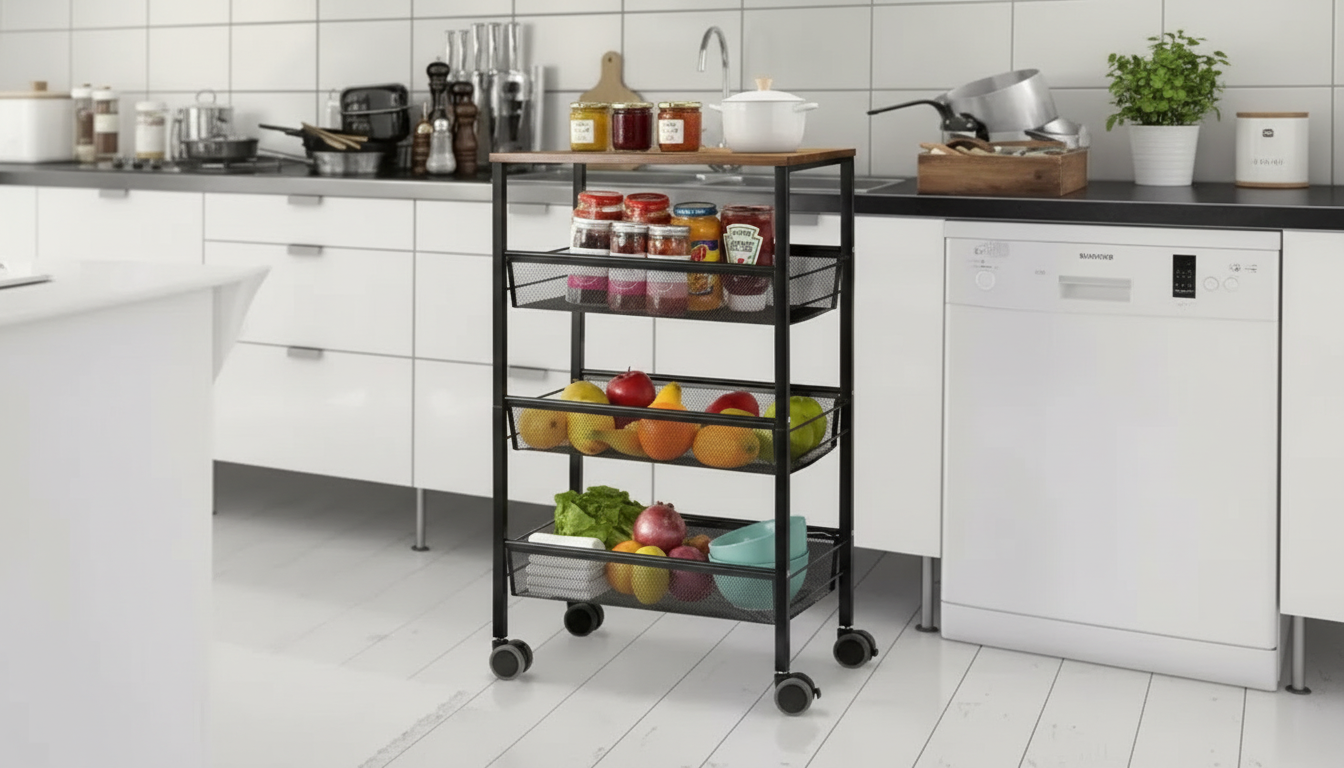
A rolling storage cart can turn unused corners into practical storage while keeping everyday items within reach. This 4-tier cart combines warm wooden shelves with smooth-rolling, lockable wheels to help organize kitchens, pantries, laundry rooms, and small apartments—without committing to permanent cabinetry.
What This Cart Adds to a Home
When storage is limited, the most useful upgrades are the ones that adapt. A 4-tier rolling cart creates “grab-and-go” organization that can live beside the fridge today and become a serving station tomorrow.
- Creates vertical storage to reduce countertop and cabinet clutter
- Moves where needed: prep area, dining space, pantry access, or cleaning station
- Lockable wheels help keep the cart steady during use
- Wooden shelves offer a sturdier feel and a warmer look than all-wire racks
For added peace of mind in busy households, it also helps to follow general product safety guidance (like keeping heavy items low and locking wheels when parked), which aligns with broader recommendations from consumer safety organizations such as the U.S. Consumer Product Safety Commission (CPSC).
Best Places to Use a 4-Tier Rolling Cart
The biggest advantage of a mobile cart is flexibility. Instead of buying separate organizers for every room, one cart can handle multiple roles depending on the day and the season.
- Kitchen: hold small appliances, spices, oils, cutting boards, or extra dishware
- Pantry overflow: organize snacks, baking supplies, and bulk items by shelf
- Coffee or tea station: dedicate a tier to mugs, pods/tea, syrups, and stirrers
- Dining room: serve as a compact bar cart for bottles, mixers, and glassware
- Laundry room: store detergent, stain removers, dryer sheets, and baskets
- Bathroom: use as a towel and toiletry tower when cabinets are limited
- Home office/craft area: sort paper, tools, and supplies in a movable setup
Quick Setup Ideas by Room
| Room |
Top Shelf |
Middle Shelves |
Bottom Shelf |
| Kitchen |
Appliances used daily |
Oils, spices, utensils |
Heavier cookware or bulk items |
| Pantry |
Snacks |
Baking goods, grains |
Beverages or larger containers |
| Laundry |
Pre-treaters |
Detergent & softener |
Extra towels or storage bin |
| Bathroom |
Skincare |
Toiletries & refills |
Towels or cleaning supplies |
Key Features to Look For
Not all rolling carts feel the same once they’re loaded up. A few practical details can make the difference between a cart that stays stable and one that wobbles or becomes annoying to use.
- Tier count and spacing: four levels help separate categories and reduce stacking
- Shelf material: wooden shelves can be easier to wipe down and look more furniture-like
- Wheel quality: smooth casters protect floors and reduce wobble when loaded
- Locking mechanism: locks stabilize the cart for slicing, dispensing, or serving
- Footprint: choose a width/depth that fits narrow gaps while still holding essentials
- Edge design: raised lips or protective rails help keep items from sliding during movement
If the cart will support food-related items, it’s also helpful to be familiar with basic sanitation and equipment considerations, like choosing cleanable surfaces and keeping stored items protected; background guidance is available from organizations such as NSF International.
Everyday Use: Rolling, Parking, and Loading
A rolling cart works best when it’s set up like a mini “station,” not a random stack of items. A few small habits keep it stable and easy to navigate through tight spaces.
- Balance weight: place heavier items on lower shelves to improve stability
- Lock wheels before use: especially before dispensing liquids or pulling items from the top shelf
- Optimize reach: keep frequently used items at mid-height to avoid constant bending or stretching
- Mind heat and moisture: wipe shelves dry and avoid prolonged exposure near sinks, steam, or heat sources
- Use containers: small bins or baskets group items and reduce tipping while moving
For busy kitchens, many households find a “daily zone” system helpful: top shelf for quick-grab items, middle shelves for categories (spices, snacks, cleaning), and bottom shelf for heavy backup stock.
Care and Maintenance
Rolling carts tend to live in high-traffic areas, so basic upkeep keeps them looking good and rolling smoothly over time.
- Clean shelves with a soft, damp cloth; dry promptly to protect the wood finish
- Avoid harsh abrasives that can dull surfaces or scratch protective coatings
- Check caster screws periodically and tighten if the cart sees frequent rolling
- Remove hair and debris from wheels to keep rolling smooth on tile or wood floors
- Use felt pads or a thin mat if parking in one spot on delicate flooring
Product Snapshot
At-a-Glance Details
More In-Stock Finds for Organized Spaces
FAQ
Do lockable wheels keep the cart from moving during use?
Locking casters are designed to reduce rolling while the cart is parked, helping it stay in place during serving or everyday grab-and-go use. For best stability, lock the wheels (especially the locking ones) and place heavier items on the lower shelves.
Can a rolling kitchen cart be used outside the kitchen?
Yes—rolling carts work well in laundry rooms (detergent, stain remover, towels), bathrooms (toiletries, skincare, towels), and offices/craft areas (paper, tools, supplies). The tiers make it easy to assign categories so items don’t get mixed together when you move the cart.
How should heavier items be arranged on a 4-tier cart?
Place heavier items on the bottom shelf, medium-weight items in the middle, and light or fragile items on the top shelf. This layout improves balance, makes rolling safer, and helps prevent tipping when turning or stopping.
Recommended for you









Leave a comment