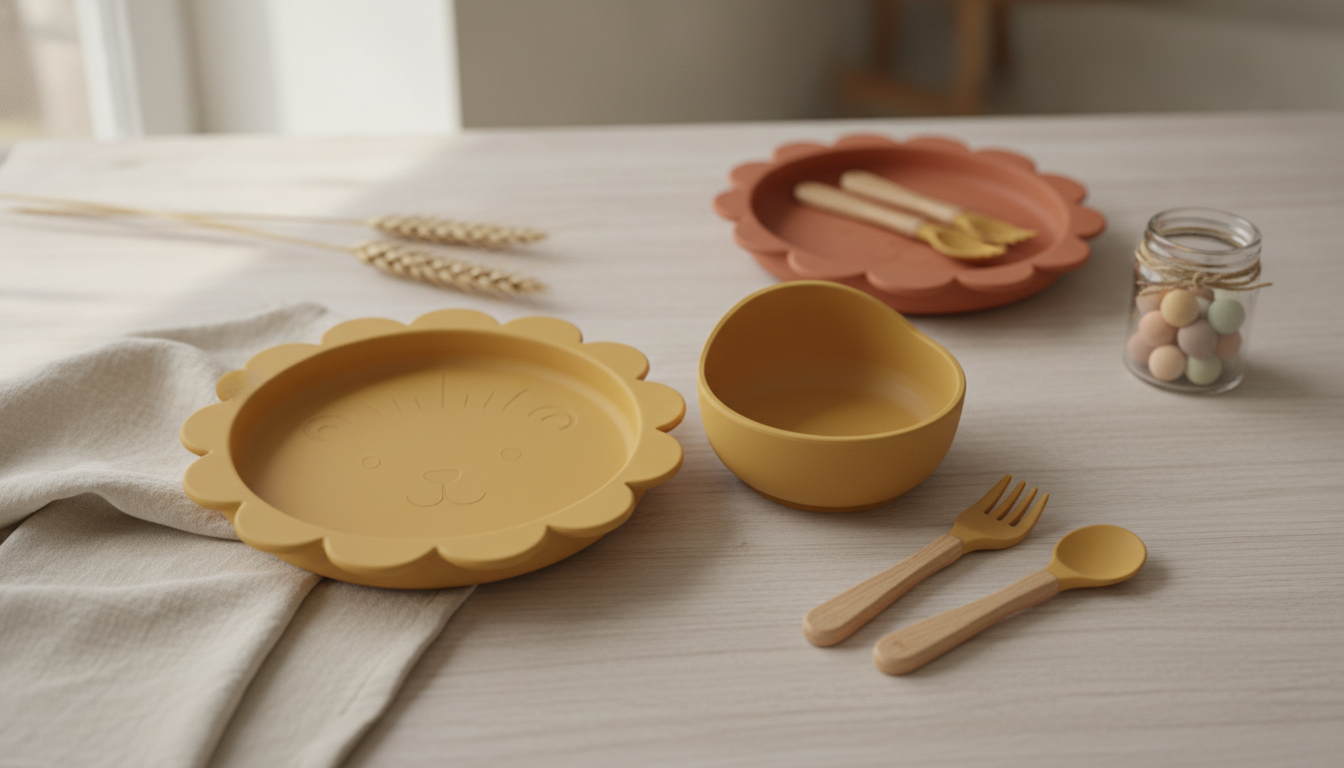
Mealtime gets simpler when baby essentials are easy to grip, gentle on gums, and quick to clean. This 3-piece silicone set pairs a playful lion-themed plate and bowl with a spoon and fork designed for early self-feeding—supporting smoother transitions from purees to finger foods while keeping everyday routines practical.
What’s Included in the Set
- Lion-themed silicone plate for portioning and serving baby-friendly meals
- Matching silicone bowl for purees, oatmeal, yogurt, and snacks
- Silicone spoon and fork sized for small hands and early coordination
- A cohesive set that reduces mismatched pieces and simplifies packing for travel or daycare
For parents building a consistent feeding setup, a coordinated plate, bowl, and utensils helps reduce the “where did that spoon go?” scramble and keeps routines familiar for baby.
Why Silicone Works Well for Baby Feeding
- Soft, flexible material that’s gentler during teething and early chewing phases
- More grippy than many hard plastics, helping reduce slips during scooping
- Less prone to shattering than ceramic or glass if dropped
- Often suitable for busy routines thanks to easy washing and quick drying
When choosing any food-contact product, it’s smart to follow the manufacturer’s use and care directions and stick with items intended for food use. For additional background on food-contact materials, the FDA provides an overview of food contact substances.
Everyday Uses by Stage
- Early solids: use the bowl for smooth purees and the spoon for controlled small bites
- Thicker textures: oatmeal, mashed vegetables, lentils, and chia puddings are easier to serve in the bowl
- Finger foods: use the plate to separate foods (fruit, pasta, soft-cooked veggies) and help baby explore variety
- Self-feeding practice: offer the fork for soft foods as hand-to-mouth coordination improves
Feeding readiness can vary, so it helps to use developmental cues and pediatric guidance when introducing solids. The American Academy of Pediatrics shares practical tips on starting solid foods, including texture progression and timing considerations.
Comfort and Ergonomics for Little Hands
- Spoon and fork shapes that are easier for small hands to hold, supporting grip development
- Rounded edges that feel more comfortable during early mouth exploration
- A manageable utensil size for learning scooping, stabbing soft foods, and bringing food to the mouth
- A playful design that can help turn mealtime into a familiar routine
Small ergonomic wins matter: a utensil that’s easier to grasp can reduce frustration, encourage independent attempts, and make it more likely that baby stays engaged for a few extra minutes—often long enough to finish a reasonable serving.
Cleaning and Care Tips
- Wash before first use; follow any care instructions included with the product
- Use mild soap and warm water for daily cleaning; rinse thoroughly to reduce lingering odors
- If odors develop, soak briefly in warm water with baking soda, then rinse and air dry
- Store fully dry to help prevent moisture-related smells
- Inspect utensils regularly and replace if torn, deeply cut, or overly worn
Because silicone can sometimes hold onto strong scents (like garlic or dish soap), thorough rinsing and fully drying between uses can make a noticeable difference in freshness.
Quick Guide: How to Use the Set in a Typical Day
- Breakfast: bowl for yogurt or oatmeal; spoon for gentle pacing
- Lunch: plate for small portions and separation (protein, veggie, fruit); fork for soft pasta or avocado
- Snacks: bowl for berries or puffs; plate for crackers and cheese cubes
- On-the-go: bring one piece at a time to keep bags lighter—bowl and spoon for messy foods, plate for finger foods
Suggested pairings for common baby foods
| Food type |
Best piece to use |
Why it helps |
| Purees (apple, carrot, sweet potato) |
Bowl + spoon |
Contains mess and supports small, controlled bites |
| Oatmeal, yogurt, chia pudding |
Bowl + spoon |
Easy to stir and scoop; reduces spills |
| Soft fruit (banana, ripe pear) |
Plate + fork (optional) |
Separates items; fork practice for soft foods |
| Pasta, soft-cooked vegetables |
Plate + fork |
Encourages self-feeding and coordination |
| Dry snacks (puffs, crackers) |
Bowl or plate |
Quick serving and easy cleanup |
Safety Notes to Keep in Mind
- Always supervise babies and toddlers during meals
- Check temperature of warmed foods before serving
- Avoid using any item that shows damage such as cracks, tears, or deep cuts
- If introducing new foods, follow pediatric guidance for allergens and choking hazards
- Choose age-appropriate food sizes and textures for the child’s current feeding stage
Choking prevention is a key part of safe self-feeding. For a helpful overview of higher-risk foods and preparation tips, see the CDC guidance on choking hazards.
Product Snapshot
More In-Stock Finds
If you’re stocking up on everyday home essentials, these items are also currently available:
FAQ
What age is this feeding set suitable for?
This set is a good fit for the early solids and early self-feeding window, when babies begin practicing spoons and exploring soft finger foods. Since readiness varies by child, follow your pediatrician’s guidance and your child’s developmental cues.
How should silicone baby dishes be cleaned to prevent lingering smells?
Wash with mild soap and warm water, rinse thoroughly, and let everything dry completely before storing. If odors persist, a short soak in warm water with baking soda can help, followed by rinsing and air drying.
Is silicone safer than plastic for baby feeding?
Food-grade silicone is commonly used for baby feeding products because it’s flexible and durable. Check the product’s food-grade and BPA-free claims where applicable, and always follow the manufacturer’s care and safety notes.
Recommended for you










Leave a comment