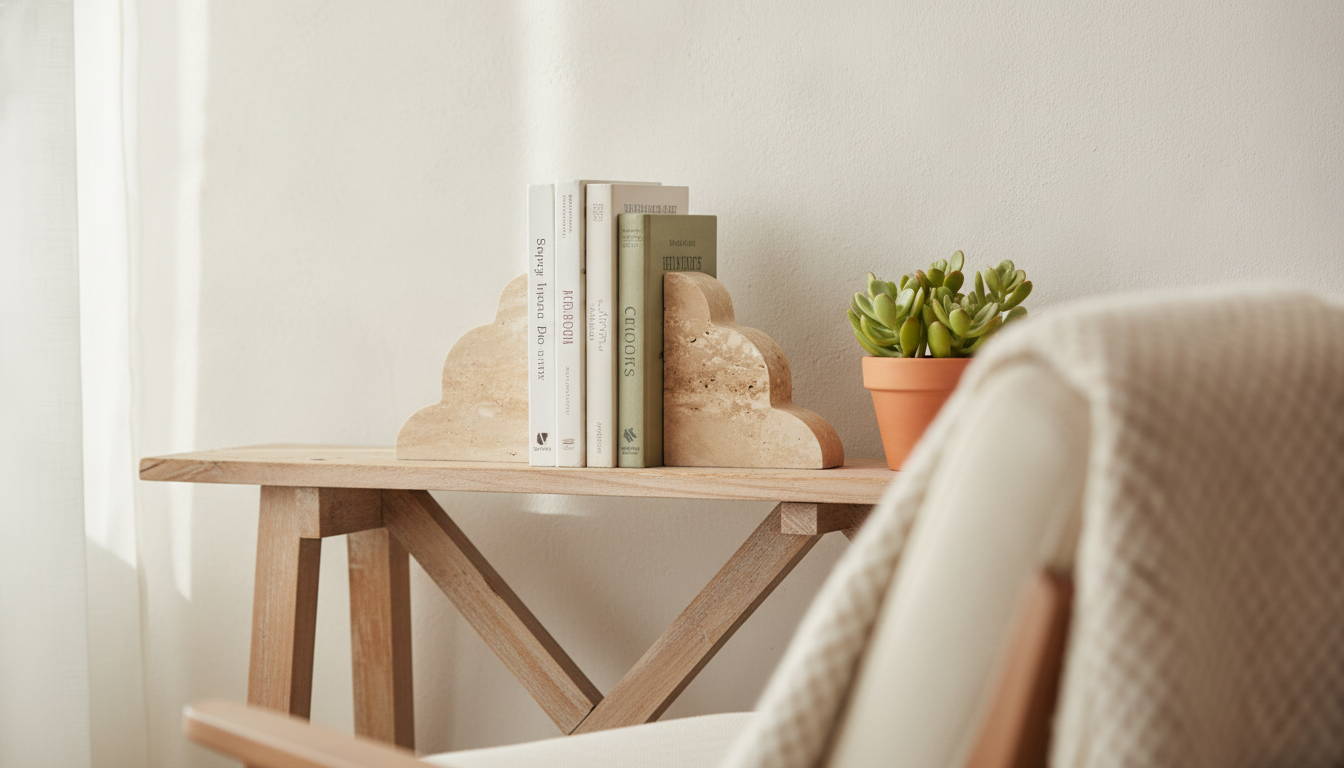
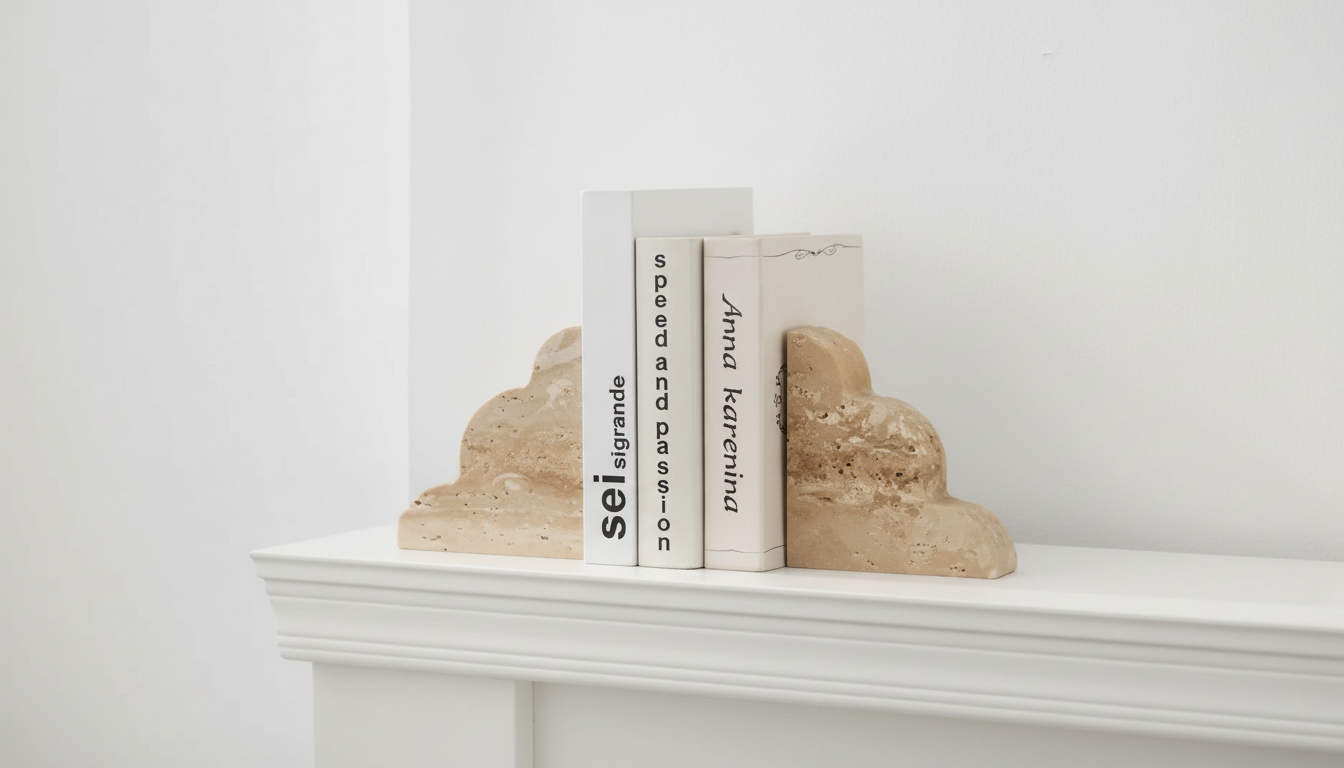
Sculptural and practical, wave-shaped travertine bookends bring a soft, architectural curve to shelves while adding the weight needed to keep books, records, and magazines upright. The natural stone’s warm, sandy tones and subtle veining make each pair feel one-of-a-kind, fitting equally well in minimalist, modern, and Mediterranean-inspired spaces. If a shelf tends to look “flat” even after styling, a curved stone silhouette is an easy way to add depth without adding clutter.
What Makes the Wave Shape Stand Out
Most bookends are all right angles—useful, but visually quiet. A wave profile creates movement and a designed look, even when the shelf isn’t fully styled.
- Curved silhouette adds flow and intention, especially on open shelving.
- Works as decor on its own: the form reads as a small sculpture on a console or coffee table.
- Pairs naturally with stacked books, horizontal piles, or a mix of books and objects.
- Soft edges balance hard lines from shelving, frames, and electronics.
To keep the shape visible (and not lost behind spines), try leaving a small gap between the wave and the last book, or angle a few covers outward to echo the curve.
Why Travertine Works for Bookends
Travertine is a calcium-based natural stone known for its subtle pores, tonal variation, and understated warmth. Those qualities happen to be ideal for bookends—both in performance and in style.
- Naturally heavy material helps prevent tipping, especially for tall hardcovers and art books.
- Warm neutral palette complements wood, white lacquer, black metal, and colorful book spines.
- Each piece has unique pores and veining; small variations are part of the stone’s character.
- Matte-to-satin look feels at home in rustic, modern, and contemporary interiors.
For stone care basics and what to avoid, the Natural Stone Institute’s stone care guide is a helpful reference, especially when you’re mixing materials like wood, metal, and stone on the same surface.
Where to Use Them at Home
Travertine bookends are versatile because they do two jobs at once: they hold items in place and visually “anchor” a surface. A few tried-and-true spots:
- Living room: anchor coffee-table books or style a shelf with a candle and small vase beside them.
- Home office: keep reference books in place while adding a calming, natural material to a desk or credenza.
- Bedroom: use on a nightstand for journals and a couple of favorite reads (especially helpful if the stack tends to slide).
- Entryway console: hold mail organizers, magazines, or thin art books so the surface looks tidy, not piled.
- Media area: corral vinyl records or large-format magazines—just ensure the shelf depth allows stable placement.
Styling Ideas That Feel Intentional
Because travertine is visually quiet, it plays well with both minimal and layered styling. A few approaches that look deliberate rather than “decorated”:
- Match natural textures: pair with linen, oak, rattan, or ceramic for a calm, cohesive mix.
- Create contrast: set travertine against glossy black frames, smoked glass, or chrome accents for a sharper edge.
- Use negative space: place bookends with a small gap so the wave profile reads clearly from across the room.
- Layer heights: combine tall books with a low bowl or small sculpture nearby to keep the shelf from feeling top-heavy.
- Keep the palette simple: neutrals plus one accent color (a single bold spine or a small object) creates a clean, gallery-like shelf.
Product Snapshot
If you’re looking for a set that reads as both functional and sculptural, the Wave-Shaped Travertine Bookends offer a warm stone look with organic variation and the stability needed for everyday use. They’re currently in stock at $252.67 (USD).
At-a-Glance Details
| Detail |
What to expect |
| Material |
Travertine (natural stone) |
| Visual character |
Natural pores and veining; variations between pieces |
| Style |
Sculptural wave form; neutral, warm-toned stone look |
| Use cases |
Books, magazines, records, shelf styling |
| Care level |
Low effort with basic stone-friendly habits |
Care and Handling Tips for Travertine
Travertine is durable for day-to-day styling, but like most natural stone, it benefits from gentle care—especially around liquids and cleaners.
- Dust with a soft, dry cloth; use a slightly damp cloth for fingerprints, then dry promptly.
- Avoid acidic cleaners (vinegar, lemon-based sprays) that can etch calcium-based stone.
- Use coasters or felt pads if placing on delicate surfaces to help prevent scratches.
- Keep away from prolonged moisture; wipe spills quickly to reduce staining risk.
- If using near kitchens, avoid direct contact with oily residue and harsh detergents.
For deeper background on stone types and best practices, the Natural Stone Institute offers clear, non-brand-specific guidance.
Choosing the Right Bookends for Your Shelf
Bookends should look good, but they also need to do the job. When selecting a set—especially for oversized books or records—these details matter most:
Gifting and Occasion Ideas
For a complementary, countertop-friendly accent (especially if gifting for a new home), the Striped Ceramic Seasoning Jar with Spoon – Hand-Painted Spice & Salt Container adds a handcrafted touch that pairs nicely with warm neutrals and natural materials.
FAQ
Are travertine bookends all the same color?
No. Travertine naturally varies in tone, pores, and veining, so each pair can look slightly different. Those subtle differences are normal and part of what makes natural stone feel special.
How do travertine bookends stay from scratching a shelf?
Use felt pads or a soft shelf liner, and lift the bookends when moving them instead of dragging. Keeping the underside free of dust or grit also helps prevent fine scratches.
What cleaner is safe for travertine?
A pH-neutral stone cleaner or mild soap and water is safest for routine cleaning. Avoid acidic or abrasive products, which can etch or dull calcium-based stone.
Recommended for you










Leave a comment