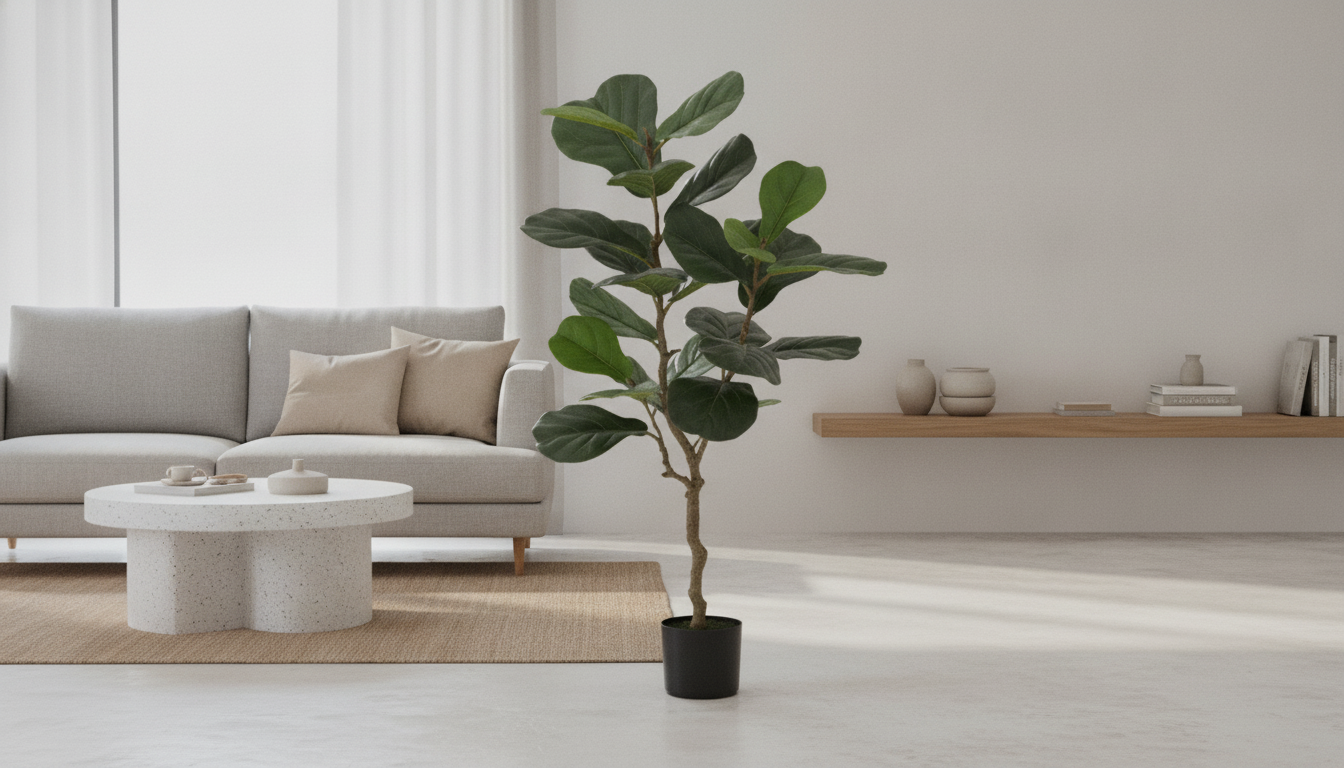
A fiddle leaf fig look adds height and softness to a space, but the real plant can be finicky about light, drafts, and watering schedules. An artificial fiddle leaf fig tree delivers the same sculptural impact with minimal upkeep, making it easy to style living rooms, bedrooms, offices, and entryways year-round.
If a corner feels “done” once it has something tall and leafy in it, this is the shortcut: consistent color, dependable shape, and a modern silhouette that pairs well with clean lines and warm textures.
Why This Tree Works in Real Homes
- Creates vertical balance next to sofas, consoles, and bookcases without needing a sunny window.
- Stays consistently full and green through seasonal changes.
- Helps soften hard edges in modern interiors and adds a natural focal point.
- No shedding soil, no watering, and no worry about pets nibbling leaves.
- Simple way to refresh a corner that feels empty or unfinished.
For households with curious pets, it can also be reassuring to reference reputable guidance on plant safety. The ASPCA’s Toxic and Non-Toxic Plants resource is a helpful baseline when comparing real plants vs. decorative alternatives.
Design Uses by Room
- Living room: place near a media console or behind an accent chair to add height and depth.
- Bedroom: flank a dresser or fill a reading nook for a calmer, layered look.
- Entryway: anchor a bare corner and pair with a tray or mirror for a welcoming first impression.
- Office: position behind a desk or in a video-call background for a clean, composed look.
- Dining area: use as a soft divider near a sideboard without blocking light.
A useful rule of thumb: taller trees visually “finish” open corners and high ceilings, while medium-height versions feel intentional in tighter layouts where you still want walking space and clear sight lines.
Choosing the Right Look: Materials, Shape, and Pot
- Leaf finish: look for varied tones and subtle veining to avoid a flat, plastic appearance.
- Branch structure: a slightly irregular silhouette reads more lifelike than perfectly symmetrical spacing.
- Trunk and stems: textured detailing and natural-looking transitions improve realism.
- Pot choice: a heavier planter helps stability; a decorative cachepot can elevate the style instantly.
- Scale: match the tree height to nearby furniture—taller for open corners, medium for tighter spaces.
Quick Guide to Picking a Placement and Pot
| Space |
Recommended placement |
Pot style |
Styling tip |
| Small apartment corner |
Near a window or floor lamp |
Slim matte planter |
Add a basket cover to warm up the look |
| Open-plan living area |
Behind a sofa or near a console |
Weighted ceramic/stone-look |
Layer with a low floor plant for depth |
| Office or studio |
Behind desk or next to shelving |
Minimal cylinder planter |
Keep surrounding decor simple to avoid clutter |
| Entryway |
Beside a bench or console table |
Tall cachepot |
Pair with a mirror to reflect light and greenery |
Styling Tips for a More Natural Finish
- Gently bend and fan out stems to create a fuller, more organic silhouette.
- Rotate leaf clusters so they face slightly different directions rather than one flat plane.
- Place in a decorative pot cover and top with moss, stones, or faux soil to hide the inner pot.
- Use warm, indirect lighting nearby to soften shine and enhance leaf depth.
- Avoid pushing it tight into a corner; a few inches of breathing room looks more realistic.
For extra realism, think in layers: a tall tree, a medium object (like a lamp or wall art), and a low element (basket, small stool, or floor cushion). This creates a relaxed “collected” feel instead of a single item standing alone.
Care and Cleaning Without the Hassle
- Dust leaves regularly with a microfiber cloth or soft duster to keep them vibrant.
- For deeper cleaning, wipe with a lightly damp cloth; avoid harsh cleaners that can dull the finish.
- Keep away from prolonged direct sunlight to reduce fading over time.
- Check stability in high-traffic areas; consider a heavier pot or discreet support if needed.
- Seasonal refresh: reposition and restyle the pot to make the space feel updated.
If you want general guidance on keeping indoor décor and surfaces looking fresh, resources like the Clemson Cooperative Extension (HGIC) offer practical home care information that pairs well with a simple dust-and-wipe routine.
A Simple Option to Bring the Look Home
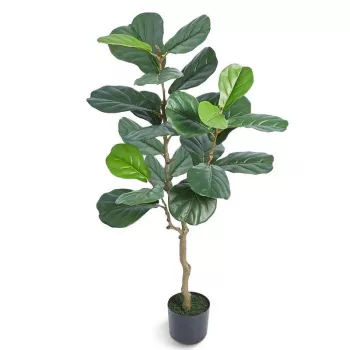
If the goal is modern greenery with zero scheduling, the Artificial Fiddle Leaf Fig Tree makes it easy to add height and softness to living spaces, offices, and entryways. It complements neutral palettes, wood tones, and clean-lined interiors, and it looks just as good as a single statement piece as it does in a layered plant corner with baskets and textured planters.
FAQ
Do artificial fiddle leaf fig trees look realistic?
They can look very realistic when the leaves have subtle veining and varied color, the branches aren’t perfectly symmetrical, and the trunk has texture. Shaping the stems and adding a pot topper (moss, stones, or faux soil) makes a big difference in how natural it reads.
How do you clean an artificial fiddle leaf fig tree?
Dust it regularly with a microfiber cloth or soft duster, then occasionally wipe leaves with a lightly damp cloth for a deeper clean. Avoid harsh cleaners, and keep it out of prolonged direct sun to help prevent fading.
Where should an artificial fiddle leaf fig tree be placed?
Place it where you want height and softness—near a media console, behind an accent chair, beside an entry console, or behind a desk for a polished backdrop. Match the size to nearby furniture and leave a few inches from walls so the silhouette looks more natural.
Recommended for you










Leave a comment