Everyday Stain Care at Home: What an Electric Teeth Polisher Can Do
Surface stains from coffee, tea, and richly colored foods have a way of showing up right when you want your smile to look its best. An electric teeth polisher with ultrasonic-style vibration and an LED light is designed to help with visible stain care and plaque film on tooth surfaces between regular brushings and professional cleanings. With multiple interchangeable heads, it’s also easier to tailor your routine—whether you want gentle contact along sensitive areas or more targeted detail work around edges and grooves.
Used with a light touch, this type of device can be a practical add-on for cosmetic upkeep at home. It’s not a replacement for daily brushing and flossing, and it’s not a substitute for dental treatment—but it can help keep tooth surfaces looking fresher in the meantime.
What This Device Helps With (and What It Doesn’t)
- Supports removal of surface stains and film on teeth from common foods and drinks
- Helps target hard-to-see areas with an LED light for closer, more controlled cleaning
- Designed for cosmetic upkeep between professional dental cleanings, not a substitute for dentist treatment
- Not intended to treat cavities, gum disease, deep tartar below the gumline, or tooth pain—those require professional care
It may help improve the look and feel of tooth surfaces, especially in areas where staining is most noticeable (front teeth and the chewing surfaces of molars). For anything involving pain, bleeding, swelling, or “hard deposits” that don’t budge, professional evaluation is the safest next step.
Key Features to Look For in an At-Home Teeth Polisher
- Multiple cleaning modes or intensity levels to match sensitivity and stain severity
- Interchangeable heads for different tasks (general polishing, detail work, and gentler contact)
- LED illumination to improve accuracy near gumlines and along the back teeth
- Ergonomic grip and easy-to-control power button placement to avoid slipping
- Simple charging or battery setup and a design that’s easy to rinse and dry after use
If you’re new to polishing tools, prioritize control and comfort over maximum power. Lower-intensity options and a gentler head can make it easier to stay consistent without irritating gums or increasing sensitivity.
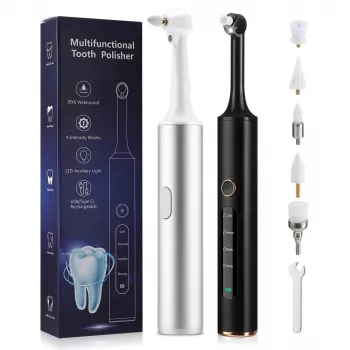
The Electric Teeth Polisher & Ultrasonic Cleaner with LED Light and 5 Heads is built for quick touch-ups on visible tooth surfaces—especially for users who want better visibility and more than one head option for different areas.
- Includes an LED light to improve visibility during use
- Comes with 5 heads to support different cleaning needs and comfort levels
- Built for quick touch-ups on visible tooth surfaces, especially on areas prone to staining
- A practical option for regular upkeep when used gently and consistently
Quick Specs Snapshot
Understanding the 5 Heads: When to Use Each Style
- Everyday polishing head: for routine surface stain care on front-facing tooth surfaces
- Precision/detail head: for edges, corners, and around brackets or tight areas (use gently)
- Gentle/sensitive head: for users prone to sensitivity or those easing into use
- Broader contact head: for faster coverage across larger tooth surfaces
- Spare/alternate head: helpful for rotation, hygiene, or maintaining performance as heads wear
A simple approach is to start with the gentle/sensitive option for your first few sessions, then rotate to an everyday or broader head only if your teeth and gums feel comfortable afterward.
How to Use It Safely for Better Results
- Brush and floss first to remove debris; use the polisher on clean tooth surfaces
- Start with the lowest intensity and a gentle head until comfort is confirmed
- Keep the tip moving; avoid holding it on one spot to reduce irritation and enamel wear risk
- Focus on stained surfaces (front teeth and chewing surfaces) and avoid aggressive pressure near gums
- Rinse the mouth and the head after use; allow parts to dry fully before storing
Think of polishing as a light, controlled “buff,” not scrubbing. The goal is to work gradually and evenly across the tooth surface. If you feel heat, sharp sensitivity, or gum irritation, stop and reassess your technique (lighter pressure, lower intensity, or a gentler head).
For broader oral health guidance and the basics of daily mechanical cleaning, the CDC’s oral health resources and the American Dental Association’s toothbrush guidance are helpful references.
Who It’s Best For
When to Skip At-Home Polishing and Call a Dentist
It’s also smart to check in with a dentist if you’re considering any whitening or stain-removal routine and aren’t sure what’s causing discoloration. The ADA’s overview of tooth whitening offers helpful context on what whitening can and can’t do.
Care, Cleaning, and Head Replacement
More In-Stock Finds
FAQ
Is an electric teeth polisher safe for enamel?
It’s generally intended for surface stain care when used gently, briefly, and with continuous movement. Avoid pressing hard or holding it in one spot, and stop if sensitivity increases—especially if you have existing enamel wear or dental work.
How often can it be used?
Start conservatively with occasional touch-ups and adjust based on sensitivity and how quickly stains return. Overuse or aggressive technique can irritate gums and increase sensitivity.
Can it remove tartar (calculus)?
These devices typically help with surface stains and soft plaque film on tooth surfaces. Hardened tartar usually requires professional dental cleaning and scaling.
Recommended for you











Leave a comment