Clean brushes help makeup apply more evenly and can reduce buildup of oils, pigments, and product residue. A silicone cleaning bowl paired with a drying and storage tool streamlines the routine: scrub, rinse, reshape, and set brushes to dry in a tidy, dedicated spot. If brush washing tends to feel messy or easy to put off, a simple silicone setup can make the whole process faster and more consistent.
What the set is designed to do
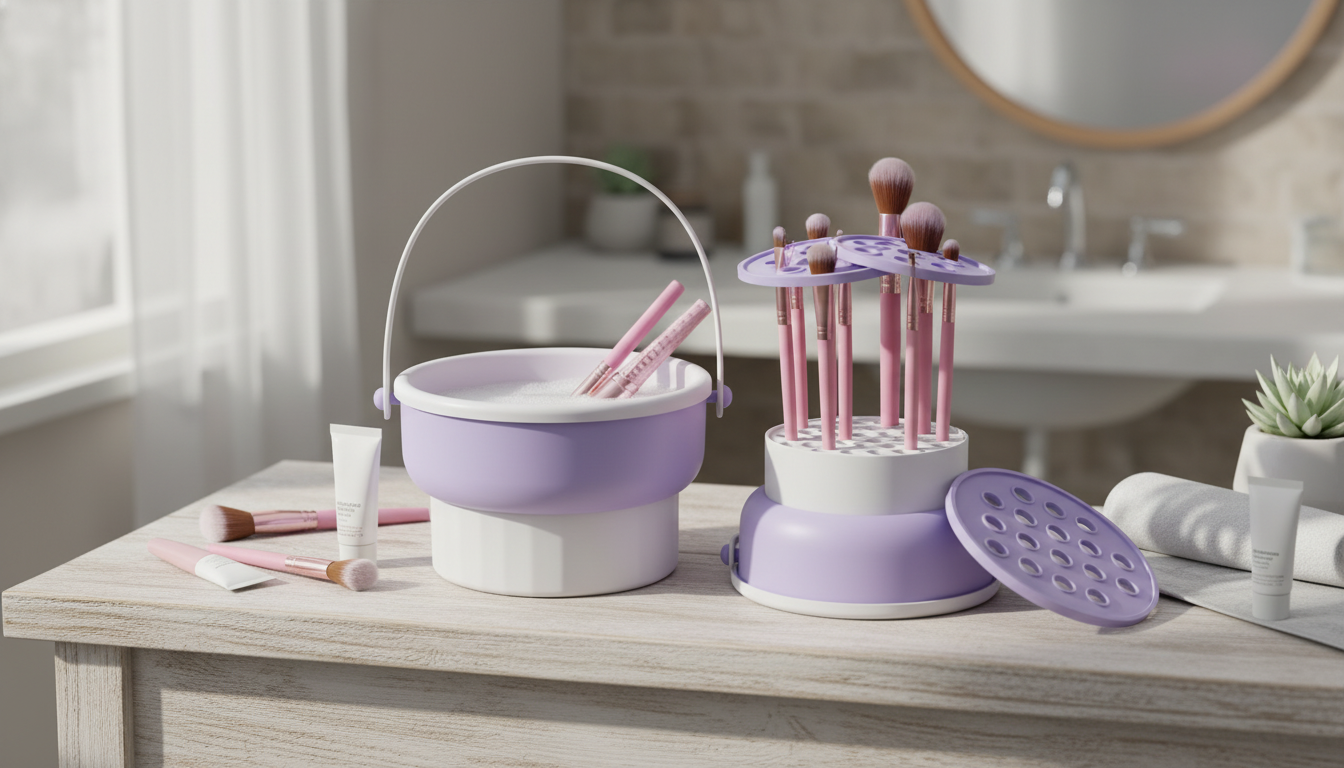
A silicone bowl and drying/storage tool combo focuses on practical, everyday brush care. Instead of juggling a towel, a cleanser cap, and a crowded sink edge, the set creates a contained place to clean and a defined place to dry.
- Provide a textured silicone surface to loosen foundation, cream, powder, and pigment buildup during washing.
- Keep brush cleaning contained in a single bowl to reduce splashes and mess around the sink.
- Support drying by holding brushes in place after rinsing so they can air-dry with less rolling or crowding.
- Offer a simple storage home for frequently used brushes and small beauty tools between washes.
- Fit easily into a bathroom vanity, makeup station, or travel kit due to flexible silicone components.
How to use it: a quick clean-to-dry routine
A good wash is less about scrubbing hard and more about using gentle cleanser, controlled water, and steady agitation on the silicone texture. The steps below work for most brush types.
- Wet bristles with lukewarm water while keeping the ferrule (the metal part) as dry as possible.
- Add a small amount of gentle brush cleanser or mild soap to the silicone bowl surface or bristles.
- Swirl and sweep the bristles across the textured silicone to lift residue; use lighter pressure for delicate or natural hair brushes.
- Rinse until water runs clear, then gently squeeze out excess water with fingers or a clean towel—avoid twisting the bristles.
- Reshape the brush head and place brushes into the drying tool so airflow can reach the bristles as they dry.
For skin-focused hygiene basics, the American Academy of Dermatology Association shares straightforward guidance on how and when to wash makeup brushes.
Cleaning methods by brush type
Different tools hold onto product differently. Dense face brushes may hide creamy residue near the base, while small eye brushes can lose shape if scrubbed aggressively.
- Foundation and concealer brushes: wash more frequently since creamy products can cling and build up; use the silicone texture to work product out of dense bristles.
- Powder brushes: focus on thoroughly rinsing from the center of the brush head; fluff and reshape before drying.
- Eye brushes: use a small amount of cleanser and shorter scrub strokes to protect shape and prevent splaying.
- Sponges and puff tools (if used): press and release against the silicone texture to move cleanser through the material, then rinse thoroughly and air-dry fully.
- Handle care: wipe handles clean and keep water from running into the ferrule area to help preserve adhesive and reduce shedding.
If you’re acne-prone or trying to minimize pore-clogging buildup, keeping applicators clean can be a helpful supporting habit alongside other basics. The Mayo Clinic provides an overview of acne self-care and prevention fundamentals.
Features to look for in a silicone bowl + drying storage setup
Not all cleaning bowls (or drying stands) function the same way. A few small design details can make cleaning easier and drying more reliable.
At-a-glance guide: matching the tool to the task
| Task |
Best setup |
Tip for better results |
| Deep-clean dense face brushes |
Bowl with deeper grooves/texture |
Use short scrub strokes and rinse repeatedly until clear |
| Quick clean between colors |
Textured bowl surface with minimal soap |
Use a tiny amount of cleanser and rinse lightly; dry thoroughly before reuse |
| Drying without misshaping |
Drying holder/stand that keeps brushes separated |
Reshape bristles and avoid drying bristle-down if water can run into the ferrule |
| Keeping tools tidy |
Storage area/holder included in the set |
Store fully dry brushes only to avoid trapped moisture |
Care tips for the bowl, drying tool, and brushes
Who it’s useful for
If you want a straightforward, budget-friendly way to keep tools cleaner and counters less cluttered, the Silicone Makeup Brush Cleaning Bowl & Drying Tool Storage Set keeps the routine in one coordinated setup.
More in-stock picks
FAQ
How often should makeup brushes be cleaned?
Face brushes used with liquid or cream products are best washed at least weekly (more often if you’re acne-prone or using them daily), while powder brushes can often be washed every 1–2 weeks. Eye brushes used with creams or liners usually benefit from more frequent cleaning to prevent buildup and color mixing.
Is silicone safe to use on makeup brushes?
Yes—silicone textures are commonly used to provide gentle agitation that helps lift residue. Use light pressure (especially for natural hair), and avoid pulling, twisting, or aggressively grinding bristles against the texture.
What’s the best way to dry brushes after washing?
Gently reshape the brush head, keep airflow around the bristles, and avoid high heat. Position brushes so water doesn’t run into the ferrule, and only store brushes once they’re fully dry to help prevent trapped moisture and odors.
Recommended for you











Leave a comment