Fast Drying in a Foldable Format
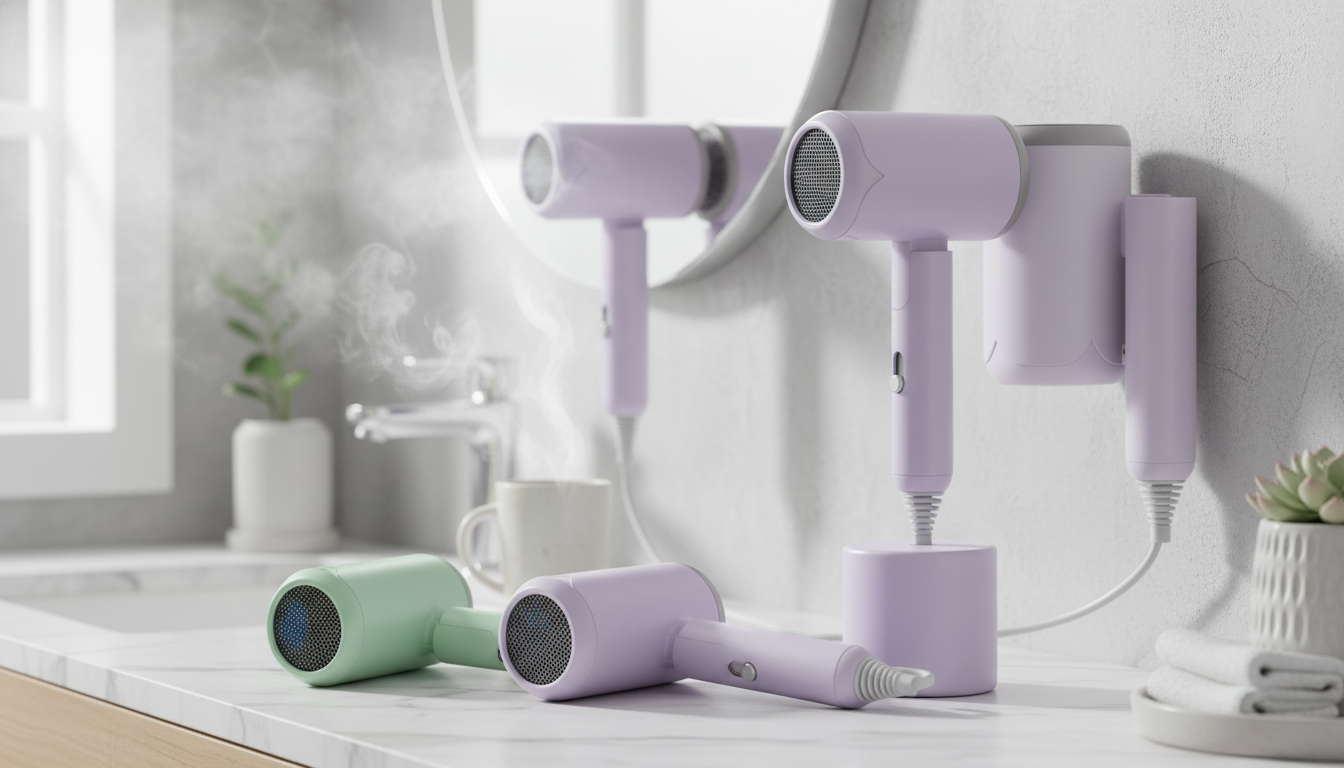
A hair dryer can be small without feeling underpowered. The Folding High-Speed Hair Dryer with Cold & Hot Air, Ionic Care & Quiet Motor is designed for quick airflow, everyday hot/cold control, and a compact folding handle that makes storage and packing easier. It’s a practical pick for home routines, gym bags, and travel—especially when a smoother-looking finish and more comfortable noise levels matter. For more guidance, see 8 Best (And Smallest) Travel Hair Dryers 2019 – TravelisLife.org.
What makes a folding high-speed dryer different
High-speed dryers prioritize airflow efficiency. Instead of leaning only on higher heat, a high-speed motor moves more air through the hair to help water evaporate faster. That approach can be especially helpful when mornings are busy and you want less time under heat. For further reading, see 9 Best Travel Hair Dryers to Pack in Your Carry-On.
- High-speed airflow: Meant to reduce drying time by moving more air through the hair, rather than relying only on higher heat.
- Folding handle portability: A fold-down design fits more easily in drawers, gym bags, and carry-ons.
- Hot and cold modes: Warm air supports drying; cool air helps finish and refine the shape.
- Ionic care: Intended to reduce the look of frizz and flyaways by helping manage static during drying.
Cold & hot air settings for daily styling
Hot and cold airflow isn’t just a “nice extra”—it’s a simple workflow that can make hair look more polished with less effort. Use warm or hot air for the bulk of drying, then switch to cold air near the end to help settle the look after brushing or tension-drying.
- Hot/warm for speed: Focus on the roots first, where moisture tends to linger.
- Cold for finishing: A final cool pass can help smooth the cuticle appearance and support longer-lasting shape.
- Fine or fragile hair: Try lower heat first and increase airflow before increasing temperature when possible.
- Thick hair: Work in sections; alternate warm drying with brief cool shots to reduce puffiness.
Simple setting guide by goal
| Goal |
Recommended air/heat |
Technique |
| Fast everyday dry |
Hot or warm air |
Keep the nozzle moving; focus on roots first, then lengths |
| Smoother finish |
Warm air, then cold air |
Brush or tension-dry, finish with a cool pass from top to ends |
| Reduce frizz look |
Moderate heat + ionic care |
Dry in sections; direct airflow downward along the hair |
| Add volume at roots |
Warm air |
Lift roots with fingers or round brush; finish with cold air |
Ionic care: what it can and can’t do
Ionic features are commonly included to help reduce static, which can make hair appear smoother and less “fluffy” after blow-drying. The biggest difference typically comes from pairing ionic airflow with solid technique—especially airflow direction and keeping the dryer moving.
- What it can do: Help manage static so hair looks sleeker, with fewer flyaways for many hair types.
- How to get the most from it: Aim the airflow from roots to ends (down the hair shaft) to encourage a smoother-looking finish.
- What it can’t do: It doesn’t replace conditioning treatments if hair is chemically damaged or severely dry.
- If hair feels dry afterward: Lower the heat, increase movement, and finish with a cool pass to reduce over-drying.
Quiet motor benefits for comfort and routine
Noise is part of the daily experience, not just a spec on a box. A quieter motor can make blow-drying more comfortable in shared spaces, early mornings, or late nights. It can also feel less tiring during longer sessions—like when drying thick hair or longer lengths.
- Less disruption: Helpful when others are sleeping, working, or sharing a bathroom wall-to-wall.
- Less fatigue: Lower perceived noise can make longer routines feel easier.
- Usability still matters: Comfort depends on grip and balance; folding designs can store smaller without sacrificing handling when open.
- Keep performance steady: A clear air intake supports smooth airflow and can prevent extra noise caused by blockage.
Folding design for travel, gym bags, and small bathrooms
A folding handle is a straightforward upgrade when space is limited. It reduces bulk in a toiletry kit or backpack and makes it easier to tuck the dryer into a drawer rather than leaving it on the counter.
Who it’s suited for
Care, safety, and best practices
Good technique protects hair and helps the dryer perform consistently over time. For general hair care guidance, the American Academy of Dermatology Association offers practical tips for maintaining hair and scalp health. For broader consumer safety context around personal care products, the U.S. Food & Drug Administration is a helpful reference.
Helpful add-ons to round out your routine
FAQ
Does ionic care help with frizz?
Ionic care can help reduce static so hair often looks smoother and less flyaway after drying. Results vary by hair condition and humidity, and it works best when airflow is directed downward from roots to ends.
When should cold air be used during blow-drying?
Use warm or hot air to remove most moisture, then switch to cold air at the end to help refine the shape and smooth the finish. Cold air is also a good option anytime hair feels heat-sensitive.
How can a hair dryer be kept quieter over time?
Keep the intake/filter area clean, avoid blocking vents, and store the cord without stressing the folding joint. Restricted airflow can make a dryer work harder and sound louder.
Recommended for you









Leave a comment