Fall Asleep Faster Tonight: A Simple Bedtime Checklist That Calms the Mind
A consistent wind-down routine can make it easier to fall asleep, stay asleep, and wake up feeling more restored. When the brain feels “on” and bedtime keeps slipping later, a practical checklist can reduce decision fatigue and give your nervous system a predictable cue that it’s safe to power down. Below is a simple step-by-step routine you can repeat most nights, plus a short version for busy evenings and a printable-style schedule you can follow.
What “falling asleep fast” really depends on
Falling asleep quickly isn’t about forcing it—it’s about setting up the conditions that make sleep more likely.
- Sleep pressure: Your natural drive to sleep builds the longer the day is active and consistent.
- Circadian rhythm: Timing matters—light exposure, meal timing, and bedtime consistency cue the body’s clock.
- Arousal level: Stress, stimulating content, caffeine, and bright light can keep the nervous system activated.
- Environment: Temperature, noise, and light levels can either support drowsiness or keep the brain alert.
- Expectations: Watching the clock and trying to “make” sleep happen often increases anxiety and delays sleep onset.
For trustworthy, research-based sleep guidance, see resources from the National Heart, Lung, and Blood Institute, the CDC, and the American Academy of Sleep Medicine.
The fall-asleep-fast checklist (start 60–90 minutes before bed)
Start with a simple goal: reduce stimulation, lower light, and remove “tomorrow” from your brain’s to-do loop.
- Set a firm “screens dim” time: Lower brightness, enable night mode, and avoid emotionally activating content.
- Cut off caffeine early enough: Many people do best with 8–10 hours between caffeine and bedtime.
- Choose a gentle last snack if needed: Keep it small and easy to digest; avoid heavy, spicy, or very sugary foods late.
- Lower the lights in the home: Warmer, dimmer light helps signal nighttime.
- Quick reset for tomorrow: A 2–5 minute tidy + plan reduces mental looping in bed.
- Warm shower or wash-up routine: A slight post-shower temperature drop can support sleepiness.
- Prepare the room: Aim for a cool temperature, minimal light, comfortable bedding, and a consistent sound environment if helpful.
- Do a short relaxation cue: 2–4 minutes of slow breathing, progressive muscle relaxation, or a calming stretch.
- Read or listen to something neutral: Low-stakes content helps the mind disengage from problem-solving.
- Lights out at a consistent time: Target the same window most nights, including weekends when possible.
Printable checklist schedule (example timing)
| Time Before Bed |
Action |
Why It Helps |
| 90 min |
Dim lights, reduce stimulation |
Signals “night” and lowers arousal |
| 60 min |
Prep bedroom + tomorrow’s essentials |
Reduces bedtime decision fatigue and worry |
| 30 min |
Wind-down activity (reading, calm audio) |
Shifts attention away from stress loops |
| 10 min |
Breathing or muscle relaxation |
Downshifts the nervous system |
| Lights out |
Same sleep window most nights |
Strengthens the body’s rhythm |
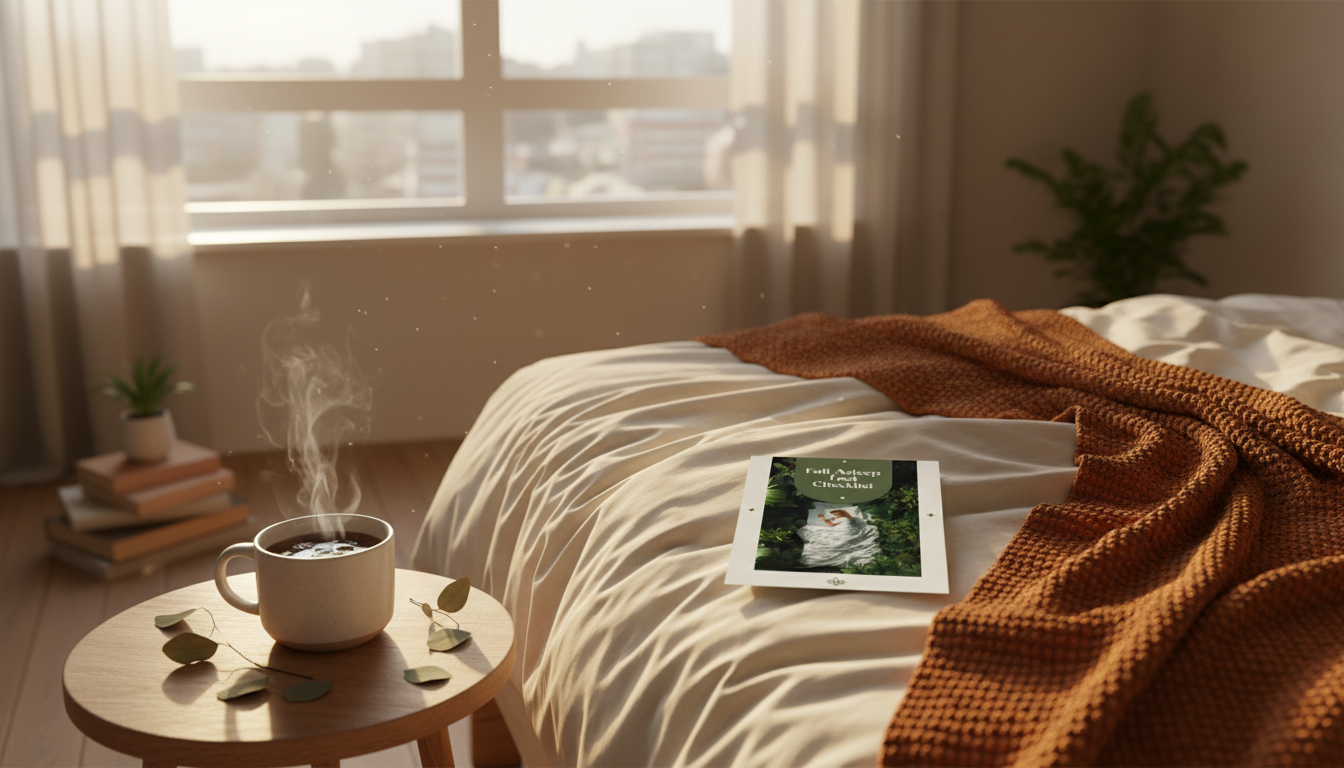
If you want an easy, repeatable version to keep by your nightstand, Fall Asleep Fast Checklist (printable digital download) turns the routine into simple checkboxes you can follow even when you’re tired.
A quick wind-down routine when there’s not much time (10–15 minutes)
When the night got away from you, keep the routine short and consistent. The goal is “downshift,” not perfection.
- Do a “brain dump” for 2 minutes: Write worries, tasks, and reminders without organizing them.
- Pick one calming anchor: Slow breathing (inhale 4, exhale 6) for 3–5 minutes or a body scan.
- Set the room: Cooler temperature, as dark as practical, and consistent background sound if silence feels activating.
- Use a simple rule: If the mind starts planning, return attention to breathing or a neutral phrase.
- Skip perfection: A short routine done consistently often beats a long routine done rarely.
One small comfort upgrade that can support your “wind-down identity” is a designated cozy layer you only wear at home at night. A soft, warm option like the Funny Design Women’s Cropped Hoodie – Trendy Hooded Sweatshirt can act as a simple cue that the day’s responsibilities are done.
If sleep doesn’t happen quickly: what to do (without spiraling)
Some nights take longer. The trick is to avoid turning wakefulness into a threat.
- Avoid clock-checking: Turn the clock away or keep the phone out of reach to reduce time anxiety.
- If wide awake for about 20 minutes: Get out of bed and do something quiet and dim until drowsy, then return to bed.
- Keep the bed for sleep: Minimize working, scrolling, or intense discussions in bed so the brain associates it with rest.
- Try a “soft focus” technique: Notice sensations (weight of blanket, breath at nostrils) rather than chasing thoughts.
- Consider patterns: If sleeplessness is frequent, review caffeine, alcohol, naps, stress load, and bedtime consistency.
Common bedtime routine blockers (and easy fixes)
A printable sleep aid for consistency
For a ready-to-use version you can save or print, the Fall Asleep Fast Checklist | Printable Sleep Aid | Digital Download keeps the process simple and repeatable.
FAQ
How long should it take to fall asleep?
For many adults, falling asleep often takes around 10–20 minutes, though night-to-night variation is normal. If it regularly takes much longer, it may help to adjust light exposure, caffeine timing, stress management, or bedtime consistency.
What is the fastest way to calm a racing mind at bedtime?
Try a 2-minute brain dump, then switch to slow breathing with longer exhales (like inhale 4, exhale 6) for a few minutes. Keep the focus neutral (body sensations or a simple phrase) and avoid clock-checking.
Should screens be avoided completely before bed?
Not always, but reducing brightness and emotional stimulation usually helps. If you use screens, keep them dim, use blue-light reduction, choose calm content, and ideally stop 30–60 minutes before lights out.
Recommended for you











Leave a comment